
A Question Worth Asking
Most people assume Cape Town in winter means rain, wind, and cancelled plans. And if you’re thinking about a tandem paragliding flight, that assumption probably feels reasonable. Cape Town’s winters are wet. The frontal systems roll in off the Atlantic, the mountain disappears into cloud, and the southeaster that dominates summer is replaced by something altogether more unsettled.
So is winter actually a good time to go tandem paragliding in Cape Town? The honest answer is: it depends on the day. But on the right days — and there are more of them than most people expect — flying in winter can be genuinely special.
The Misconception About Winter Flying
Cape Town sits in a Mediterranean climate zone. That means warm, dry summers and cool, wet winters — a pattern driven by the seasonal movement of the high-pressure belt and the arrival of cold fronts from the Southern Ocean. Winter, broadly speaking, runs from June through August.
What many people don’t realise is that Cape Town’s winter weather is not one continuous grey drizzle. It arrives and departs in cycles. Cold fronts push through — sometimes dramatically, with strong north-westerly winds, heavy rain, and rough seas — and then they pass. And what follows a cold front is often where winter’s best weather hides.
Post-Frontal Cape Town: When the Sky Clears
After a cold front has moved through, the atmosphere behind it tends to settle. The air clears, the rain stops, and you’re left with something that summer rarely offers: visibility without haze, a scrubbed blue sky, and crisp air that makes Table Mountain look close enough to touch.
These post-frontal windows can be brief or they can last several days. During these periods, north-westerly to westerly winds often follow — and at Signal Hill, that’s exactly the wind direction that makes flying possible.
Signal Hill’s launch faces west to north-west. According to the SAHPA site guide, Signal Hill “forms a smoothly-sloped ridge against the north-westerly wind,” and on days with suitable NW to WNW conditions, the site can produce wide, consistent lift with smooth air. These are not guaranteed flying days — wind strength, gusts, cloud base, and overall conditions still need to be assessed on the day. But when the pieces come together after a front, Signal Hill can be at its best.
What Makes Winter Flying Different
There are a few things that can make a good winter flying day feel genuinely different to a summer one.
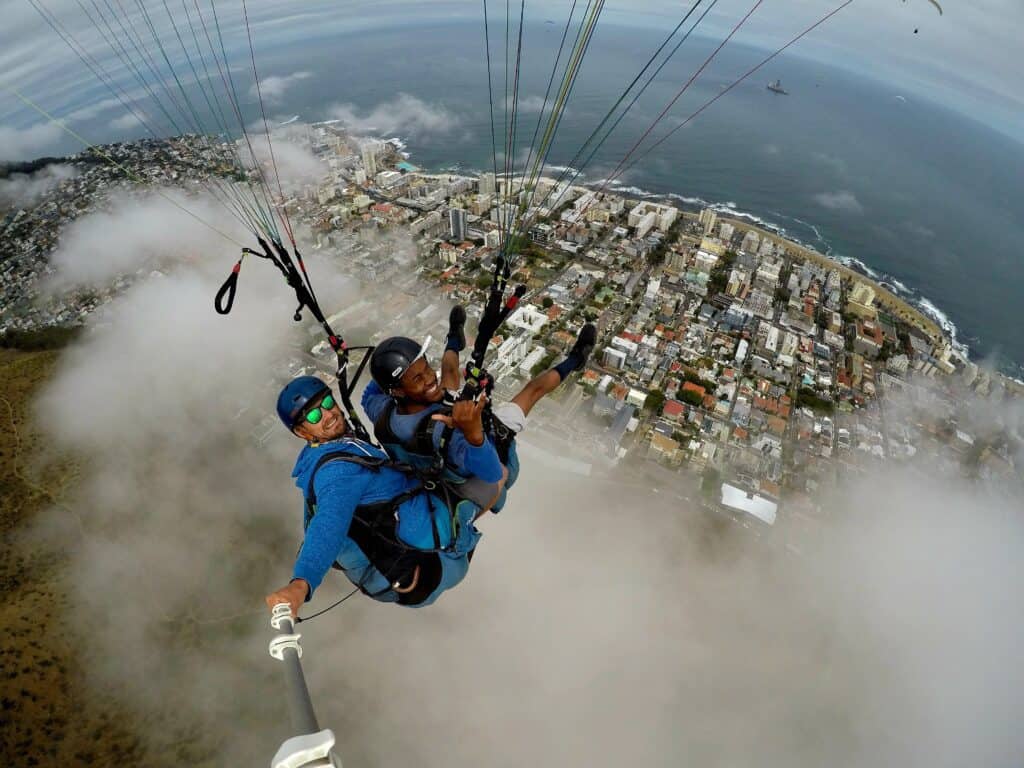
Visibility. After rain washes the atmosphere clean, the views from the air can be exceptional. Robben Island sits sharp on the horizon. The Twelve Apostles are defined and detailed. The city spreads out below you without the haze that sometimes softens summer’s edges.
Fewer crowds. Cape Town’s peak tourist season runs from December through February. Winter is quieter. If you live locally and have been putting off a flight, winter — on a good day — means shorter queues, more availability, and a more relaxed experience on the mountain.
Cooler, denser air. Colder air is denser than warm air. Denser air produces more lift from the wing and generally smoother, more stable flying conditions compared to the convective, thermally-active days of midsummer. For a first-time tandem passenger, smooth and stable is usually exactly what you want.
Drama. Cape Town in winter has a particular kind of light and atmosphere that summer doesn’t. Flying above the Atlantic with dramatic post-frontal clouds building to the north, Table Mountain behind you and the city laid out below — that’s a version of Cape Town very few people ever see.
What to Expect as a Passenger
A tandem paragliding flight works the same way in winter as it does in summer. You meet your instructor at Signal Hill Road, get a short pre-flight briefing, and run a few steps together as the glider inflates behind you. Within seconds your feet are off the ground.
In winter, you’ll want to dress warmly. A good windproof jacket, closed shoes, and long pants are advisable. It’s cooler in the air than on the ground, and at Signal Hill the wind can add a chill even on an otherwise pleasant day. Your instructor will confirm exactly what to wear when you book.
Flight duration depends entirely on conditions. Your instructor will make the most of available lift to keep you in the air as long as safely possible. Landings are typically at the Sea Point Promenade — and yes, landing on the beachfront in winter, with the Atlantic in front of you and the mountain behind, is its own kind of reward.
The Honest Truth About Weather and Safety
Paragliding is a weather-dependent activity. We do not fly every day in winter. Cold fronts, strong winds, low cloud, rain, and poor visibility are all reasons that operations are paused or cancelled. We monitor conditions carefully, and we only fly when it is safe to do so — not because conditions are merely acceptable, but because they are genuinely suitable.
If you book a flight and the weather doesn’t cooperate, we will contact you to reschedule. We’d rather do that than rush a flight in marginal conditions. That’s not a policy — it’s just how we operate.
The SAHPA-registered risk assessment for Signal Hill sets the formal operating envelope for the site. Our instructors — which include South African Paragliding Champions — read live weather data from on-site instruments and make launch decisions based on real conditions, not forecasts alone.
Why Book With Cape Hope Paragliding
Cape Hope Paragliding is a family operation run by pilots who have flown this mountain in every season, in every wind cycle, for years. We know how Signal Hill behaves after a cold front. We know which mornings are likely to clear and which aren’t. That local knowledge doesn’t come from a weather app — it comes from time on the mountain.
Our team includes SAHPA-certified tandem instructors, SACAA-licensed pilots, and South African Paragliding Champions. We fly from Signal Hill and Lion’s Head, both within the Table Mountain National Park, under an official SANParks operator permit.
If you’re a Cape Town local who’s been waiting for the right moment, winter — on the right day — might be it. If you’re visiting in winter and wondering whether it’s worth trying, the answer is: contact us, check conditions, and keep a flexible attitude. We’ll tell you honestly what we’re seeing.
Ready to Fly This Winter?
Don’t write off winter before you’ve checked the forecast. After the front clears and the sky opens up, there are days in Cape Town’s winter that are genuinely worth flying for.
Book a tandem flight online or send us a WhatsApp to ask about current conditions. We’ll give you a straight answer.
Frequently Asked Questions
Is tandem paragliding in Cape Town possible in winter?
Yes, but it is weather-dependent. Cape Town’s winter includes cold fronts and unsettled periods that are not suitable for flying. However, after fronts pass, there can be post-frontal windows with clear skies, clean air, and suitable north-westerly winds — particularly good conditions for Signal Hill. We assess conditions daily and only fly when it is safe.
What wind direction does Signal Hill need in winter?
Signal Hill’s launch faces west to north-west. The site flies best in north-westerly to west-north-westerly conditions at suitable strengths. These wind directions are common in Cape Town after cold fronts have passed, making post-frontal days some of the most viable winter flying windows.
What should I wear for a winter tandem paragliding flight?
Dress warmly. A windproof jacket, long pants, and closed running shoes are recommended. It is noticeably cooler in the air than on the ground, especially with wind chill. Your instructor will confirm clothing recommendations when you book.
Will my flight be cancelled if it rains?
Yes. Rain, strong winds, low cloud base, and poor visibility are all reasons we pause operations. If your booking falls on an unsuitable day, we will contact you as early as possible to reschedule. We do not fly in conditions that are not safe, and we do not charge cancellation fees when weather prevents flying.
Are there fewer tourists during Cape Town’s winter paragliding season?
Yes. Cape Town’s peak tourist season is December to February. Winter is considerably quieter, which means better availability, less waiting, and a more relaxed experience overall. For locals particularly, winter can be an excellent time to book — just keep some flexibility in your schedule to allow for weather windows.